
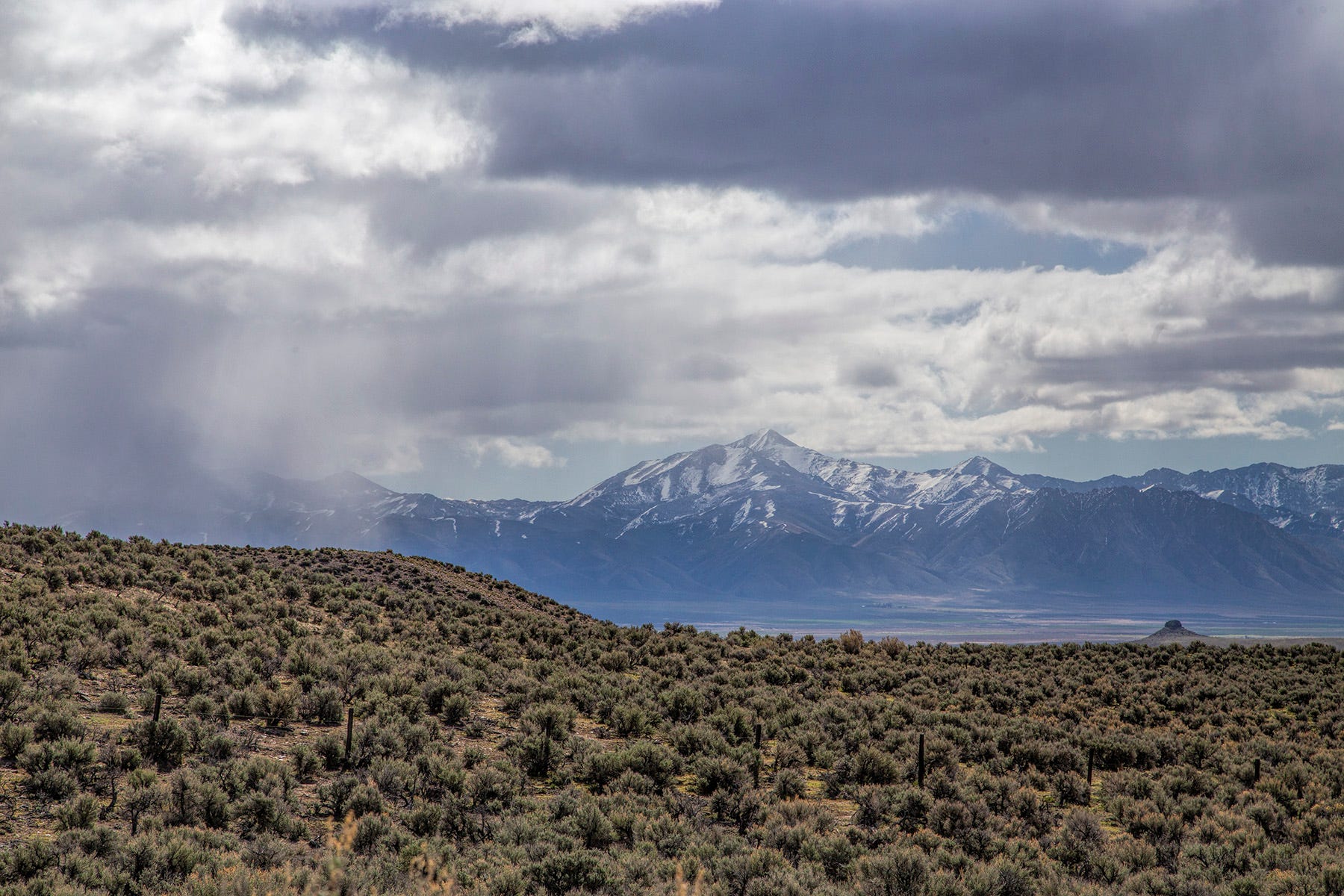
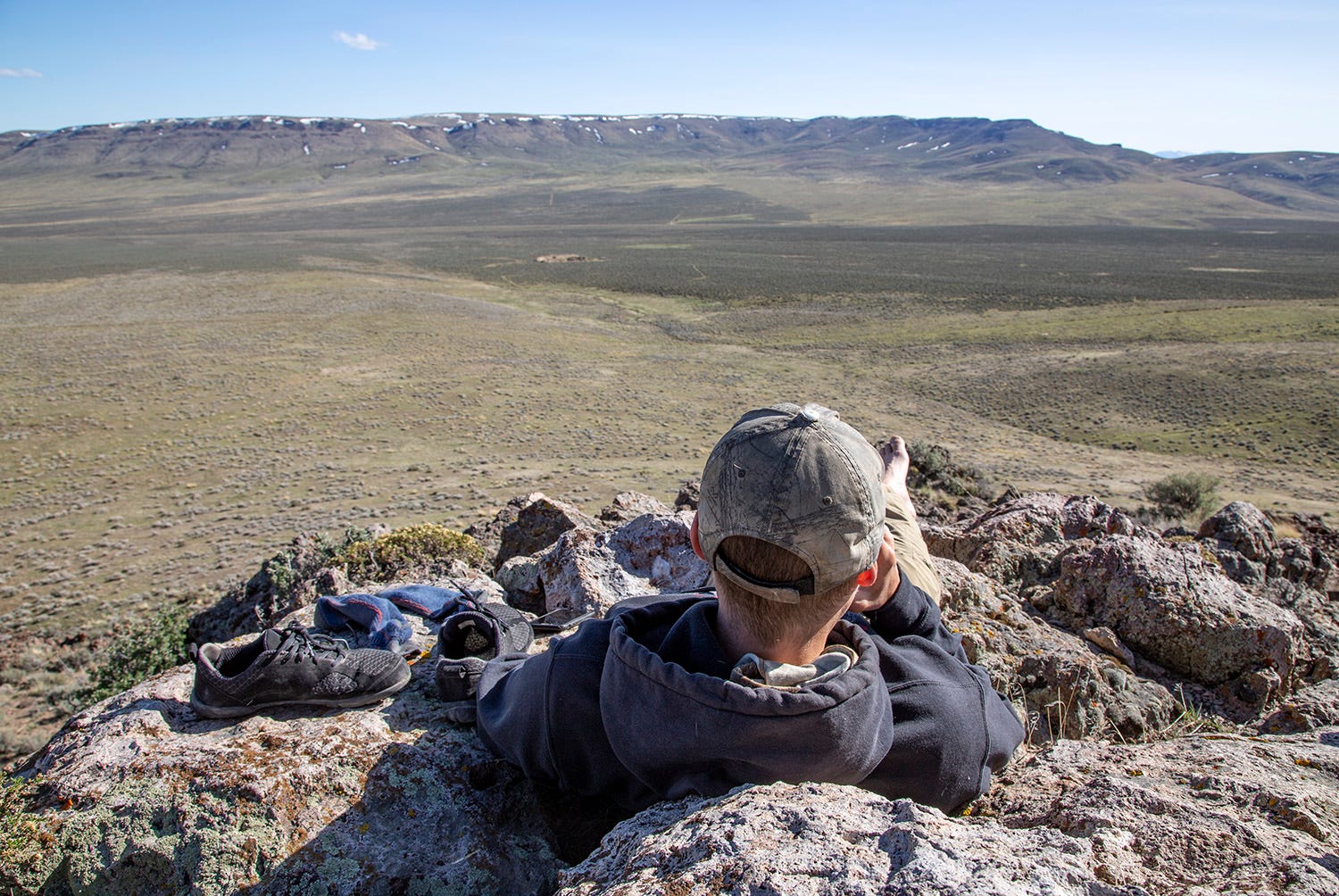
I used to be able to lie down on a rocky outcrop at Thacker Pass, and listen. Not to anything in particular—that was the point. Wind moving through sage-brush. A meadowlark somewhere below. The occasional scrape of a lizard through dry grass. Home to more than 300 species, Thacker Pass held a kind of quiet that most people never get to stand inside of: not the absence of sound, but the presence of a place still running on its own terms.
I don’t know how to lie down on that rock anymore. What’s there now isn’t a place you rest in. It’s a place you build in, on a schedule, against a deadline, for a shareholder call.
The other before-and-after
In February 2026, Lithium Americas’ CEO stood in front of investors at a BMO metals and mining conference and walked through a slide deck. It was polished, confident, exactly what you’d expect from a company trying to reassure Wall Street that construction is on track. Slide after slide of foundations poured, steel erected, equipment arriving. Progress, in their language.
I keep coming back to a few of those slides.
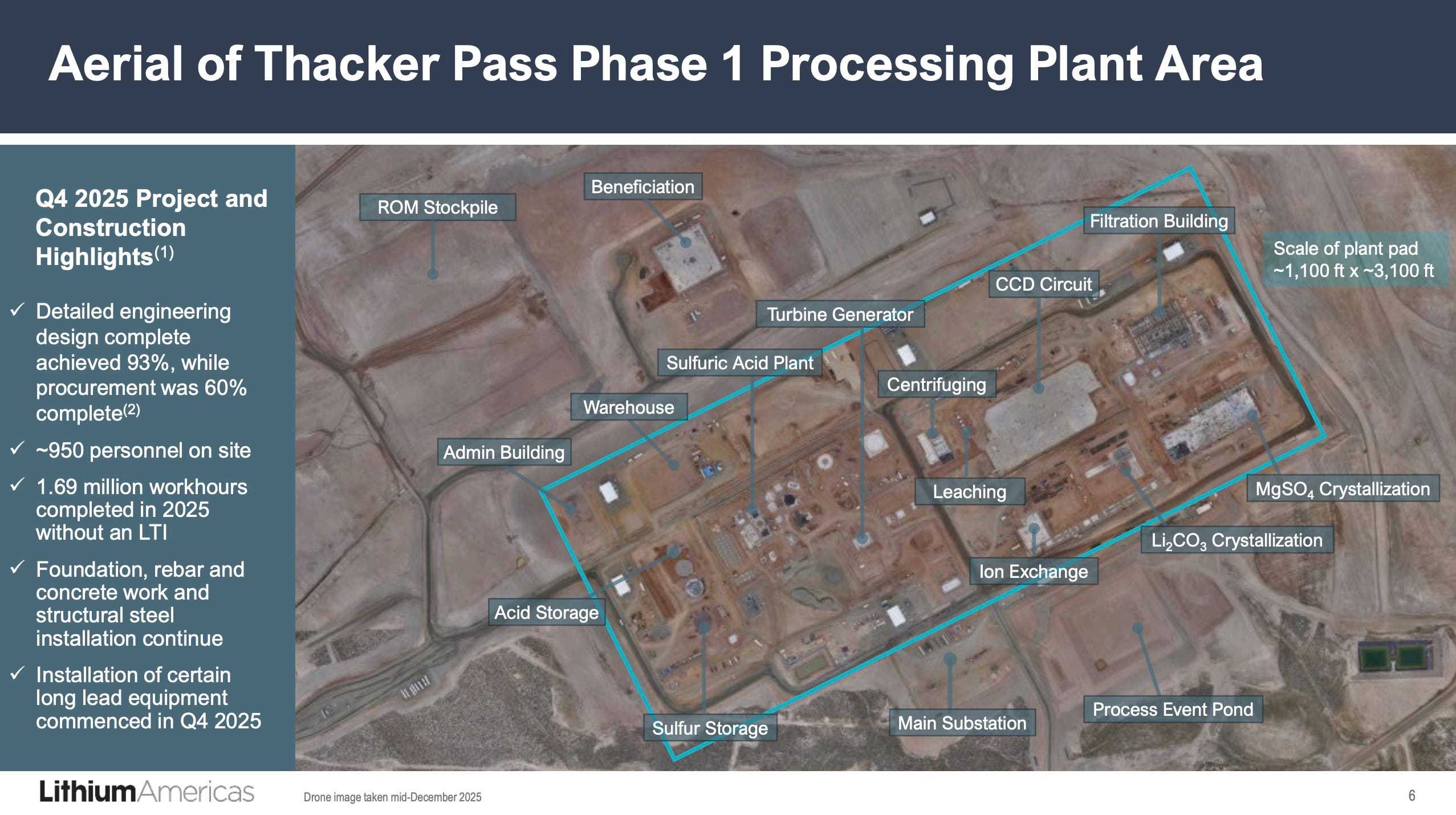
Slide 6 is an aerial photograph of the processing plant area, taken by drone in mid-December 2025. It’s labeled with the clinical precision of an engineering drawing: beneficiation, leaching, ion exchange, a sulfuric acid plant, a filtration building, an acid storage yard. A footprint, the caption notes almost as an afterthought, of roughly 1,100 feet by 3,100 feet.
Picture “lithium mine” and you probably picture the images that circulate most: the turquoise evaporation ponds of the Atacama, water pumped up from underground and left to bake off in the sun for months, in Chile or Argentina or Bolivia. Thacker Pass mine isn’t that. There’s no brine here, no ponds. This is a clay deposit, and clay is mined the way clay and rock have always been mined: open pit, exploded and dug straight out of the ground with TNT and heavy equipment. And extracting it is the “easy” part. What dominates this photograph is everything built for after the digging; everything required to turn raw clay into something a battery company will buy: a chemical processing complex the length of ten football fields, dropped into a valley that used to hold sage-brush, bunchgrass, bird nests, pygmy rabbit burrows, and lizards.
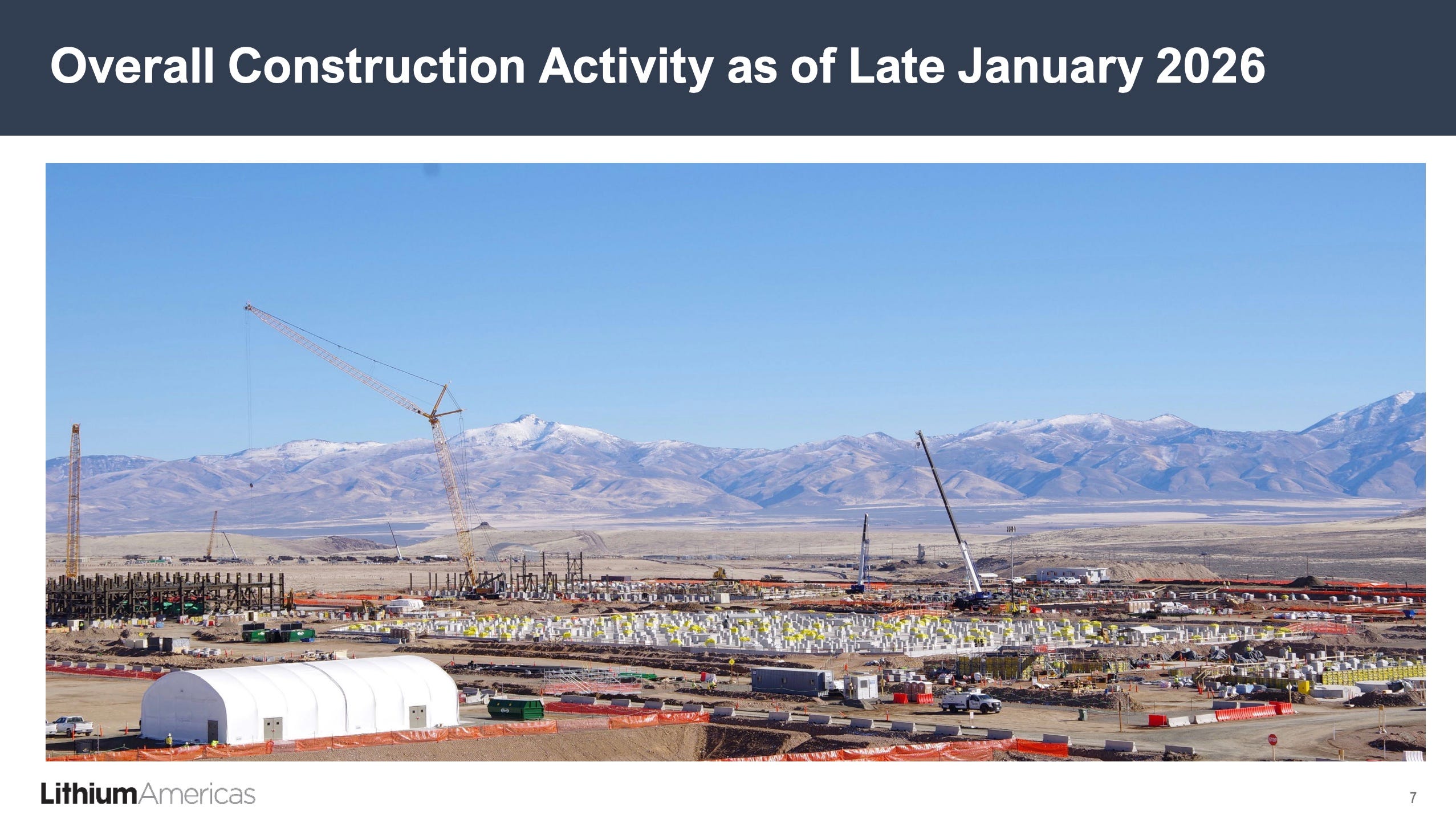
Slide 7, labeled “Overall Construction Activity as of Late January 2026,” pulls back further still; a wide, high vantage taking in the whole site with the Santa Rosas rising behind it. It’s the kind of image meant to be read at a glance: look how much the ground has changed hands since the last corporate update.
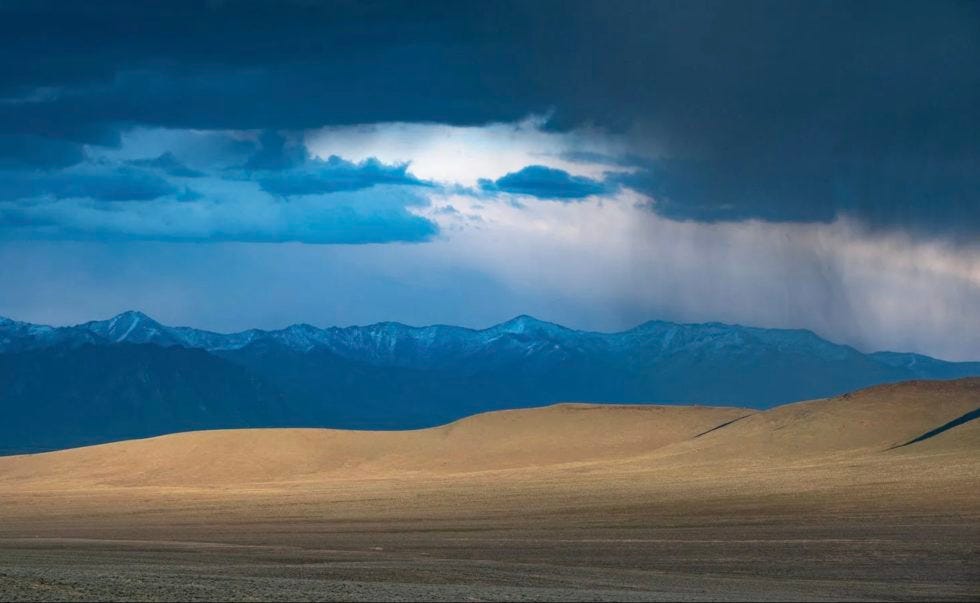
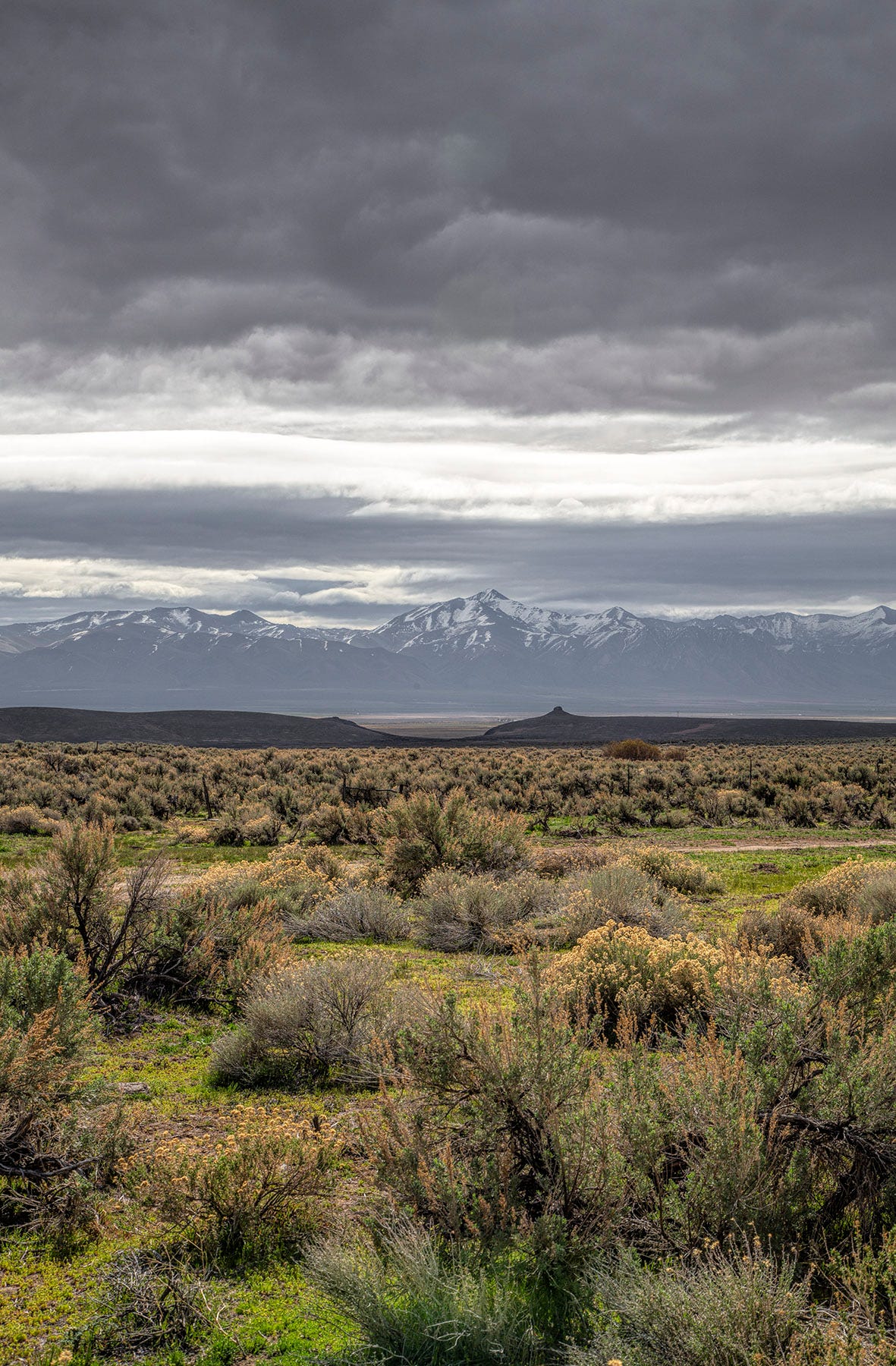
Max Wilbert, co-founder of Protect Thacker Pass, took a photograph taken from nearly the same vantage as that drone shot, looking east across that same stretch of sage-brush sea, across the valley toward the same mountains. I used his stunning photograph to accompany an essay I wrote in 2023, How destroying the land became “green.” Three years and one company slide deck apart, and you’re looking at the same land, except now it’s being used to argue for something it never asked to be used for, by a company, a government loan, and a joint-venture partner that all have a financial stake in the answer.
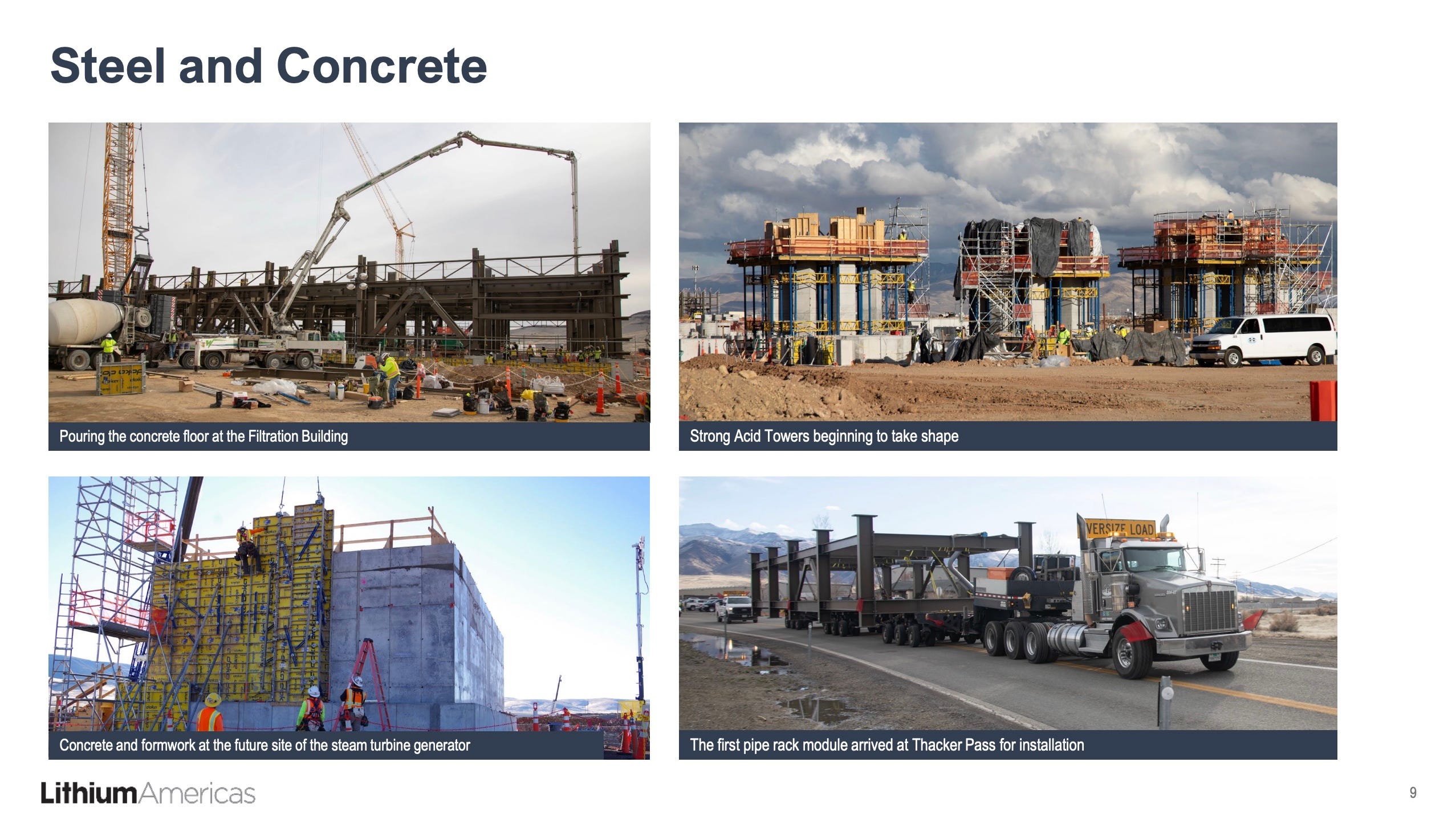
Slide 9 is titled, without irony, “Steel and Concrete.” Close-up photographs: a concrete floor being poured in the filtration building, acid towers “beginning to take shape,” formwork at the future site of a steam turbine generator, a pipe rack module arriving on a truck. It’s the kind of detail shot a company uses to prove diligence to people holding stock. Here is our work. Here is where your money went.
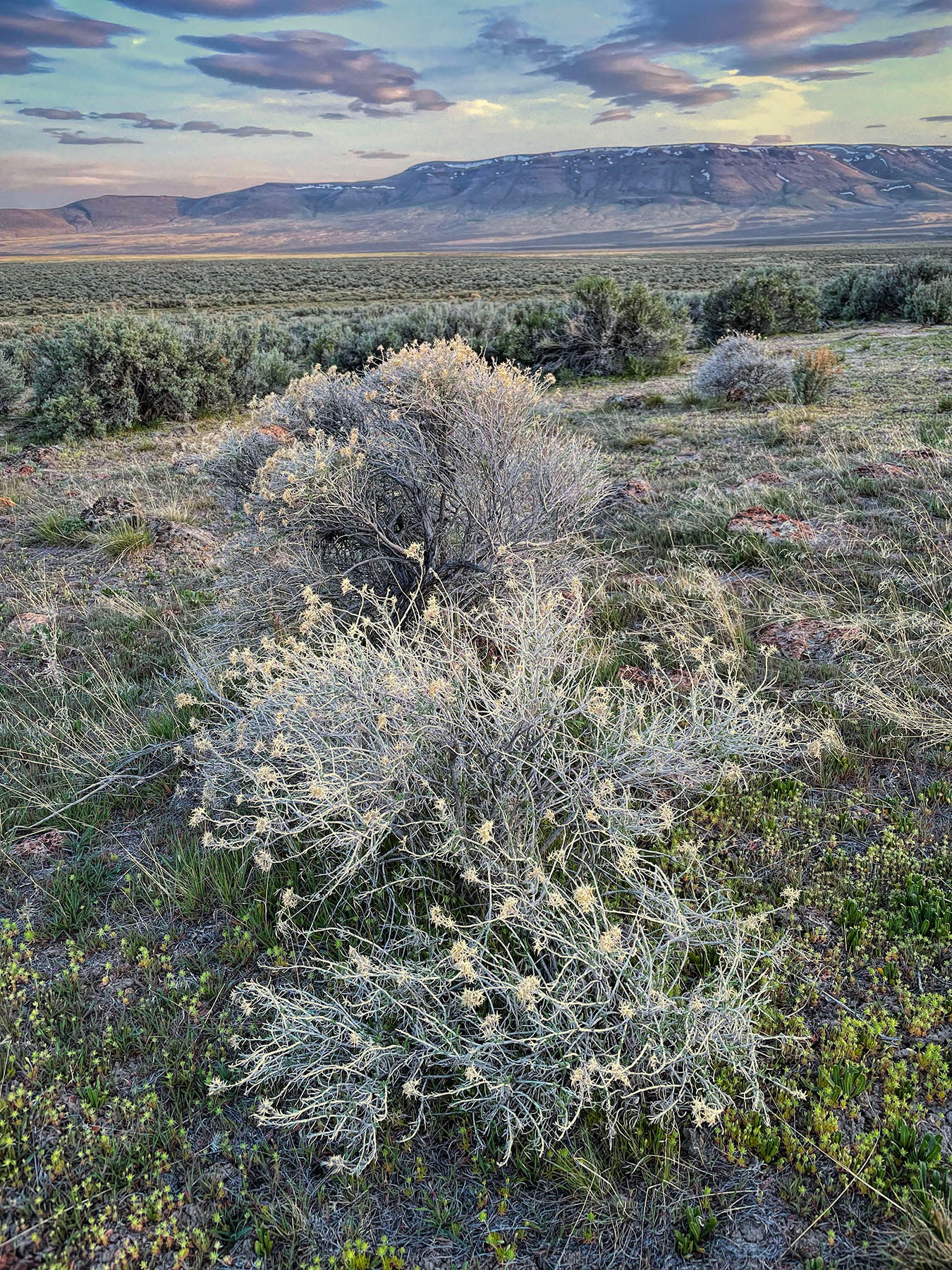
I look at their close-ups of poured concrete and formwork, and I think about the kind of close-up Thacker Pass used to offer instead: sage-brush and rabbitbrush at dusk, every branch doing something; flowering, seeding, feeding insects and birds, sheltering nests, ants, and tiny lizards—whoever needed sustenance and shelter that week, with no shareholder ever asking these wild beings to justify the expense.
Built for a promise that’s already shifting
For years, the argument for Thacker Pass was electric vehicles. Not “a mine,” but “the mine that keeps America’s climate promises.” That was the whole moral architecture of the project; the sacrifice that was supposed to buy something specific.
US EV sales have slowed. And General Motors, Thacker Pass’s joint-venture partner at 38% ownership, has been redirecting lithium from this project toward battery energy storage systems—grid batteries—partly because storage now carries richer subsidies than EVs do. The BMO deck barely dwells on this shift; it’s mentioned in the flattened, forward-looking language of an offtake agreement being “maximized” for “third parties.” But the implication is enormous. The valley wasn’t destroyed for a fixed, named purpose. It was destroyed for a purpose that can be quietly reassigned whenever the subsidy math changes.
That’s the part I want people to sit with. They took the quiet and the sage-grouse and the meadowlark and called it “green.” The thing they took it for is already drifting into something else, something they never asked the land, or anyone who loved this place, to consent to. You cannot un-destroy a place because the market shifted. There is no offtake agreement for what was here before.
The only green that matters
We tried so hard to protect this place. We fought this mine for years. We failed.
Jonathan Evans and the investors he answers to will never see it as failure. The deck he presented is a monument to a kind of pride: foundations poured, steel erected, on schedule, on budget. Nowhere in it is there room to weigh what any of that cost to the land, because profit and the law don’t ask those questions. They were never built to.
Lithium Americas’ slide deck never says “quiet.” It never says “sage-grouse” or “meadowlark” or “300 species.” It says OPEX. It says AISC. It says mechanical completion, late 2027. It says 85-year mine life, expansion potential up to five phases, 160,000 tonnes per year.
None of that is green. It never was. Real green, or what I call viridia, was the feeling I could lie down inside of, boots off, without asking anyone’s permission. Green was a sage-brush doing the slow, unglamorous work of holding the land together with no board of directors watching. Green was quiet enough to hear a lizard in the grass.
What’s there now is a footprint, a schedule, and a promise that keeps changing shape. I have the photographs of what came before. Now, that’s all that’s left of Thacker Pass—not the sage-brush, the sage-grouse, the meadowlark, the lizards, the quiet that made it Thacker Pass in the first place—just the name, kept on for a mining claim and a slide deck.
A place isn’t just its coordinates. Strip out the delicate soils and everyone who lived there and we no longer have the place we knew as Thacker Pass. We’ve kept the name and thrown out everything and everyone that name meant.
One of the penalties of an ecological education is that one lives alone in a world of wounds. Much of the damage inflicted on land is quite invisible to laymen. An ecologist must either harden his shell and make believe that the consequences of science are none of his business, or he must be the doctor who sees the marks of death in a community that believes itself well and does not want to be told otherwise. — Aldo Leopold
Photos of Thacker Pass before construction by Elisabeth Robson and Max Wilbert. Construction imagery referenced from Lithium Americas Corp.’s February 2026 investor presentation.
if this doesn't teach our hearts we must find our ways out of the clutches of modernity, I don't know what will. amplify this mass murder and allow ourselves to untangle our destructive ways. devastating--looks not to be in the explosives stage yet?
So many Thacker Passes out there. Heart wrenching.