
In “The Emptiness We Call Abundance,” I wrote about chapter 3 of Farley Mowat’s Sea of Slaughter—the story of the Eskimo curlew, a bird who once migrated in flocks vast enough to be described as darkening the sky, and who today is almost certainly extinct. That chapter is a study in what ecologists call shifting baseline syndrome: each generation inherits an already-diminished world and mistakes it for normal, so that the true scale of what’s been lost disappears along with the animals themselves.
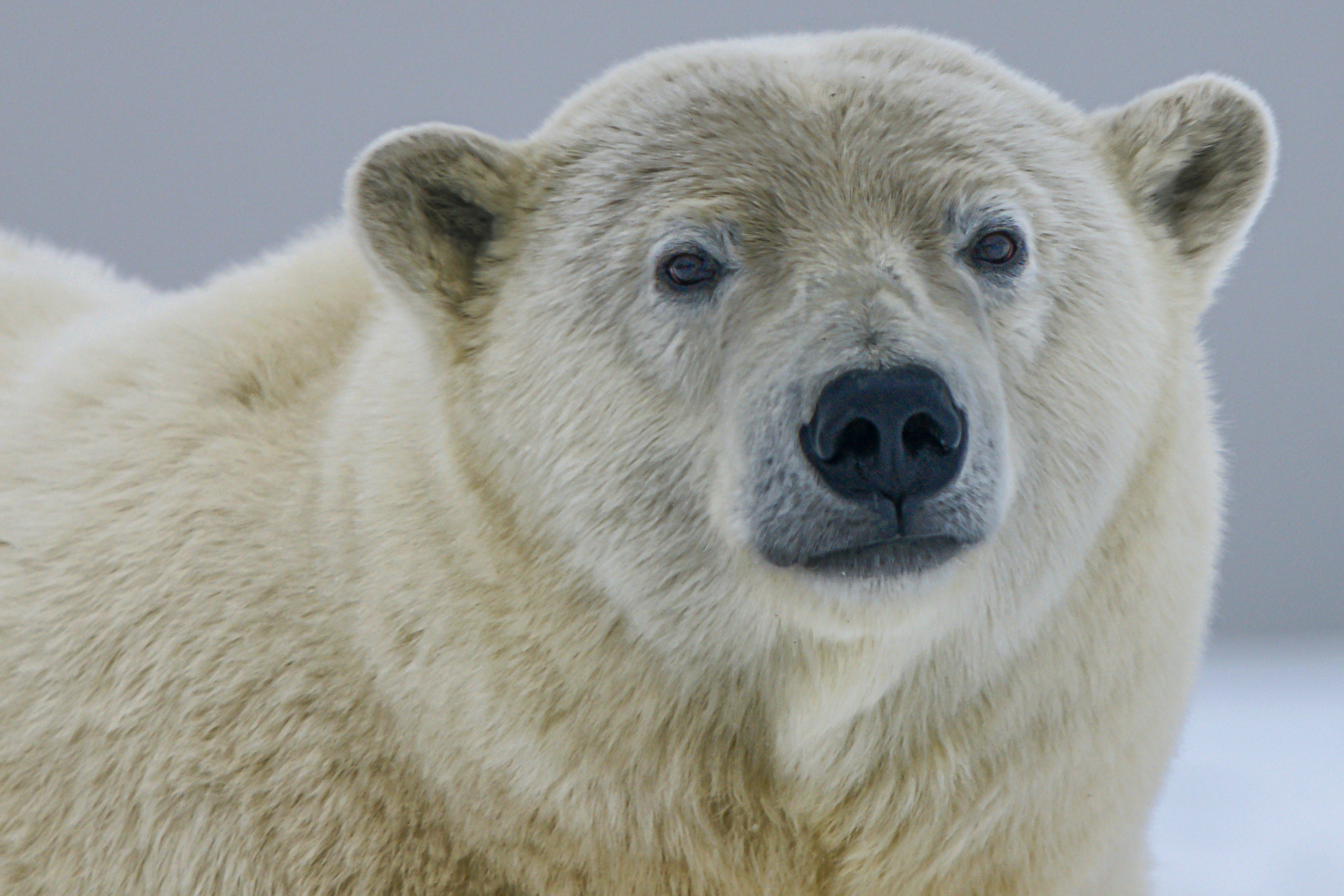
Chapter 6 of Sea of Slaughter is about a different animal: the white bear, who we now know as the polar bear, and the bear’s four-century extermination at the hands of humans along the eastern seaboard of North America. The story follows the same arc as the curlew’s, almost exactly. Like Swiftwings, White Ghost is both a study in forgetting and in something more like a law of behavior, one stated perhaps most plainly by Lyle Lewis, in his book Racing to Extinction:
“When there is a lot, we take a lot; when there is a little, we take it all.”
One of the most interesting facts I learned from this story is how the bears we once called “white bears,” “ice bears,” or “water bears,” and now call “polar bears,” were not limited only to polar regions; it is only with their ongoing extermination that we have forgotten they once lived far south of permanent snow and ice. Mowat describes how one population of bears dug earthen dens to give birth and fished in tidal mudflats along the coast of south Hudson Bay. That we now think of these bears only in terms of snow and ice is a testament to how quickly we’ve forgotten the true nature of the bear’s former lives as we’ve reduced them to a few small populations in polar regions much less tolerable for humans to spend time in.
When there was a lot
In the sixteenth century, Basque whalers began working the northern coast of the Gulf of St. Lawrence. The whale carcasses they left behind created an accidental glut of food:
“Thereafter, the number of whale carcasses increased at such a rate that not all the water bears in eastern North America could have consumed this bounty. Such a glut of food became available as a result of the Basque slaughter of the great whales that the white bear population seems to have exploded. So numerous did they become that the entire region began to acquire a singularly menacing reputation.
… In the first quarter of the seventeenth century, so Champlain tells us, not even the natives would go near the place because ‘they say that the number of very dangerous white bears are to be found there.’ Another Frenchman, Father Sagard, sailed past the island in the 1630s and noted that ‘on the Island of Anticosti it is said there are white bears of enormous size, which eat men.’”
The bears, in other words, were not yet prey, a species not yet conquered. That changed when there were no whales left to slaughter.
The turn
When the supply of whale carcasses dwindled in the early 1600s, the French had already armed the north-shore Indigenous people and drawn them into the fur trade. The bears, still abundant, stopped being feared and started being priced:
“With firearms in their hands, the natives outmatched the bears. They also ceased to regard them with traditional reverence, once it was understood that bear pelts could be translated into trinkets and brandy at French trading posts.”
By the start of the eighteenth century, the white bears of Anticosti and the whole north shore of the Gulf were being driven, as Mowat writes, “into oblivion.” By 1766, the naturalist Joseph Banks could find only the report of a single female with two cubs.
The bears held on longest on the Atlantic coast of Labrador, not yet “infested by Europeans.” Captain George Cartwright’s journal from this period is the clearest firsthand account we have of what that abundance looked like on the ground, and what was done with it:
“[I]t was Captain George Cartwright … who left us one of the best accounts of the life and times of the great white bear on the Atlantic seaboard of America.
‘About half a mile upriver, I came to a very strong shoot of water, from thence I saw several white-bears fishing in the stream above. I waited for them, and in a short time, a bitch with a small cub swam close to the other shore, and landed a little below. The bitch immediately went into the woods, but the cub sat down upon a rock, when I sent a ball through it, at the distance of a hundred and twenty yards at the least, and knocked it over; but getting up again it crawled into the woods where I heard it crying mournfully, and concluded that it could not long survive.
The report of my gun brought some others down, and a mother she bear, with a cub of eighteen months old came swimming close under me. I shot the bitch through the head and killed her dead. The cub perceiving this and getting sight of me made at me with great ferocity; but just as the creature was about to revenge the death of his dam, I saluted him with a load of large shot in his right eye, which not only knocked that out, but also made him close the other. He no sooner was able to keep his left eye open, than he made at me again, quite mad with rage and pain; but when he came to the foot of the bank I gave him another salute with the other barrel, and blinded him most completely; his whole head was then entirely covered with blood. He blundered into the woods; knocking his head against every rock and tree that he met with.’”
The day ended, by Cartwright’s own account, in six bears dead and one skin salvaged:
“‘Never in my life did I regret the want of ammunition so much as on this day; as I was by the failure interrupted in the finest sport that man ever had. I am certain, that I could with great ease have killed four or five brace more. They were in such plenty, that I counted thirty-two white bears but there were certainly many more, as they generally retire into the woods to sleep after making a hearty meal.
… Thus ended in disappointment, the noblest day’s sport I ever saw: for we got only one skin, although we had killed six bears.’”
When there was a little, they took it all
The rest of the story is the second half of Lewis’s sentence, playing out with mechanical precision. New England whalers armed the Labrador Inuit and turned them into year-round bear hunters through the 1790s. By the early 1800s, Nanuk, the great white bear, was becoming a vanishing species along a coast where Cartwright had counted thirty-two bears in a single afternoon fifty years earlier.
“The once vigorous and abundant white bear population that had occupied the coasts of the northeastern approaches to America had been annihilated. By then, mass destruction was being visited on the white bear almost everywhere it lived. With the virtual extinction of the bowhead whale, Arctic oilers turned upon the bear with terrible effect.”
By 1850, the white bear was gone from the northeastern seaboard in any breeding number. But the killing did not slow as the population did. It accelerated. In 1906, a single Norwegian crew killed 296 bears in one summer in Greenland waters. Between 1909 and 1910, British whalers in the eastern Arctic killed 476 more, rendering their fat into train oil. Ernest Thompson Seton, writing in 1909, recorded the logic of it plainly:
“It has been the custom of Arctic travelers to kill all the Polar Bears they could. It did not matter whether the travelers needed the carcasses or not… One Arctic explorer told me that he personally had killed 200 Polar Bears and secured but few of them.”
What remained was a “fast-fading wraith” and a slow, occasional epilogue: a few bears on the pack ice, a bear shot “in self-defense.”
Finally, in 1973, a single wounded animal walking into the outskirts of a Newfoundland village, threatening no one:
“Comin’ down the road there, he looked like a bloody big ghost!”
The bear was met, like every one of his kind before him, with gunfire. “Indeed. A great White Ghost,” Mowat writes.
A White Ghost, still walking
White bears are gone from a coastline where they once could be seen by the dozens in one afternoon. Eskimo curlews are gone from a sky they once darkened. Two chapters, two species, one pattern. Lewis’s sentence describes both of them exactly, because it was never really about bears, or birds. It describes the behavior of one species: ours. And our behavior has not stopped. It has only changed scale, and changed its targets, and, per shifting baseline syndrome, changed its visibility, so that each generation forgets what “a lot” used to mean before it, too, is gone.
The white bear walked into that Newfoundland village in 1973 already wounded, looking for nothing but somewhere to die. It is worth asking who is walking toward us now, and whether we will know them, or even see them, before we reach for the gun.
A fantastic, and shockingly sad story of the human destruction of our animal cousins. There are no historic excuses for the human enterprise. Now we have scaled it up to ecocide so that we can live on technological life-support in a global wasteland. Good one wise man (aka homo sapiens).
Beautifully written. Farley Mowatt was a prophet, if only we had listened.