Missing the point


My inbox is filled daily with articles and emails from people complaining about AI’s energy use, or AI’s water use, or AI data center noise pollution. Today, my morning reading included the article Engineers Found a Genius Way to Slash Data Center Energy Use, by Ivan Farkas, in Science Alert (June 14, 2026). It is about how the engineers have “solved” AI’s energy and cooling problems using copper plates:
… engineers have now developed a new, more efficient type of cooling system: a pure copper cold plate, with jaggedly jutting tips, that attaches to computer chips.
The researchers estimate that “incorporating this cold plate technology across an entire ‘high-density, next-generation’ data center could cut its cooling costs to just 1.1 percent of total energy use” (from 30 percent).
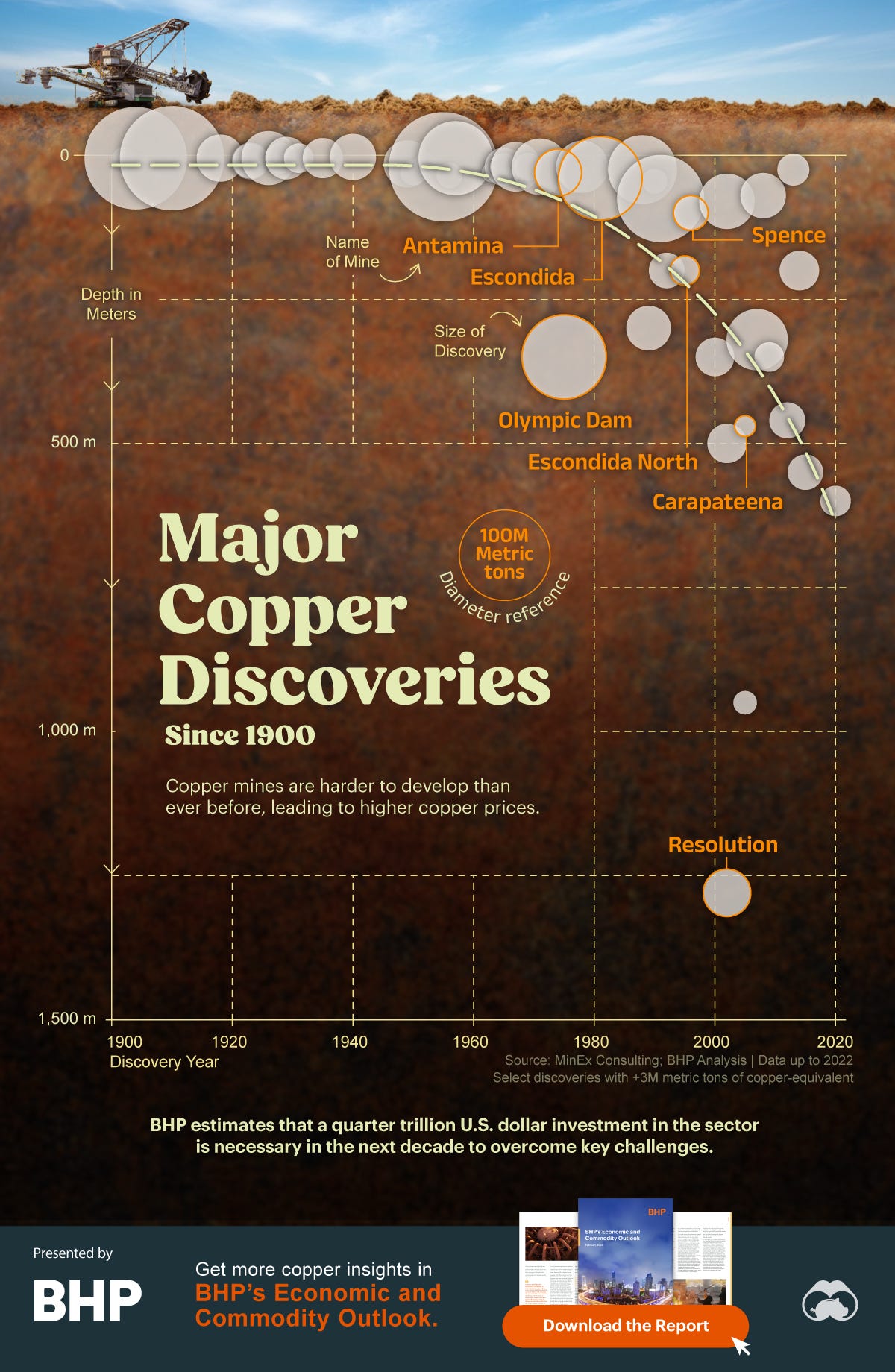
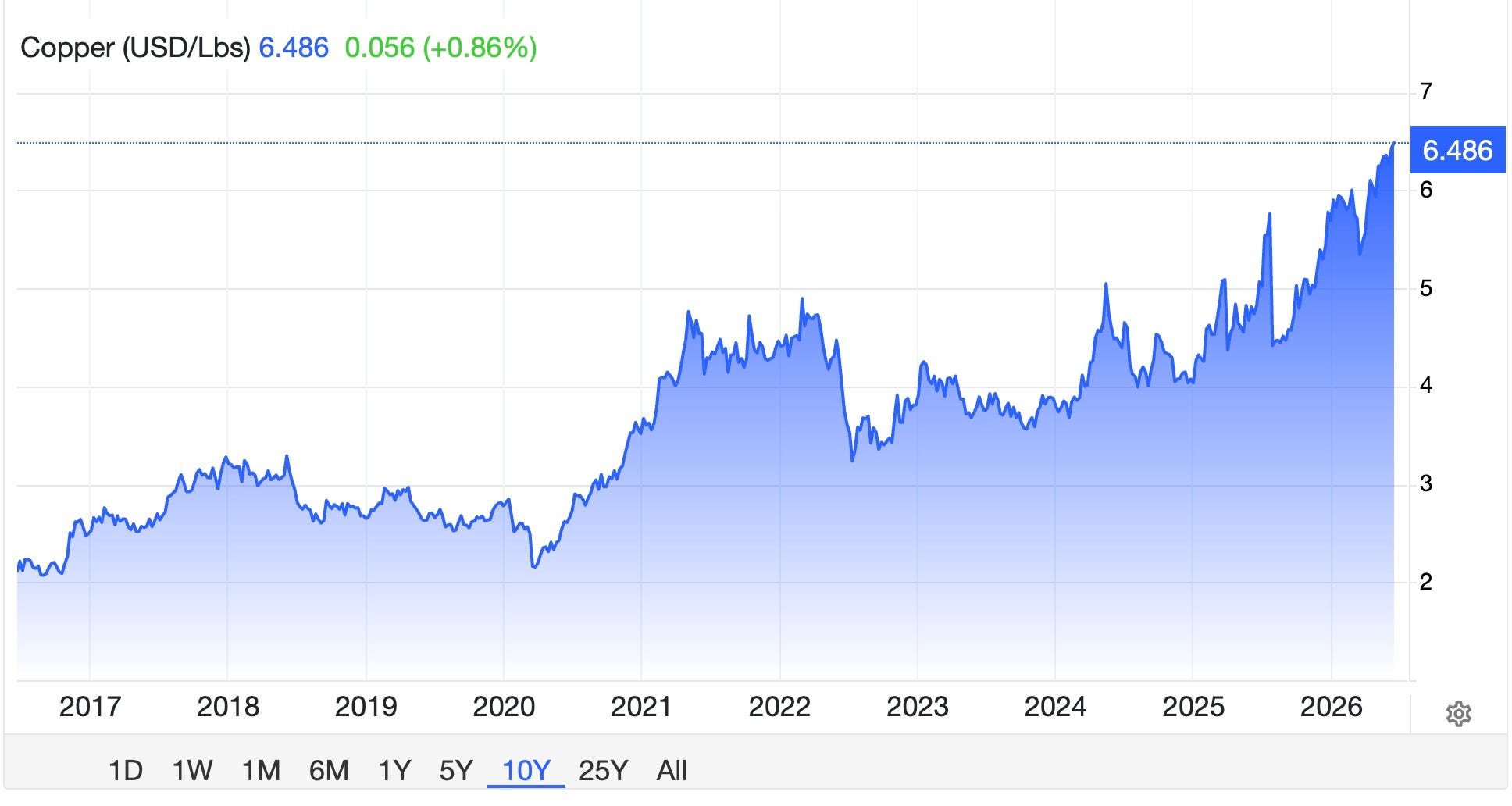
The article completely ignores the massive impacts of copper mining and refining, and ignores the plummeting grade of copper ore and the corresponding steadily increasing price of copper:
It also ignores the impacts of AI slop, described in another article I read this morning, The World’s Leading Deepfake Expert No Longer Trusts His Own Eyes, by Eli Saslow, in the New York Times (June 14, 2026).
Saslow’s article is about how Berkeley professor and computer scientist Hany Farid is dealing with dozens of requests per day to help decipher whether videos are real. Many of the videos he’s asked to look at have global or national implications if found to be real (and perhaps just as consequential if not found to be real—who is running the disinformation campaigns?).
A couple of choice quotes from the article:
It was the question that arrived in his inbox a dozen times each day: What in the world was happening?
Was that really President Joe Biden calling thousands of Democratic voters the day before the New Hampshire primary and telling them not to vote? Was that really President Trump tossing bags of garbage out of a window at the White House? Were those real nude photos of ninth graders circulating around a high school in Pennsylvania, or images that a classmate had generated with a free app? Was that really Tom Hanks advertising an obscure dental plan to his fans? Was that the C.E.O. on the Zoom call asking for a wire transfer of $25 million, or a North Korean impersonator? Was that a real gun in Alex Pretti’s hand, or just a shadow? Was that really a 12-year-old daughter on the phone, screaming for help, saying that she’d been kidnapped?
The article describes how he has, after becoming disenchanted with Silicon Valley and its billboards screaming “Stop Hiring Humans”, moved from Silicon Valley to a farm in rural Vermont to chop wood. If only we could all be so lucky!
“I can’t stand this place anymore,” he said. “These major tech giants will burn everything to the ground as long as they’re making a profit. They’re not interested in anything that’s going to slow them down.” (emphasis added)
The main point of the article is that AI is overwhelming us with slop. I don’t think I have to explain AI slop to my readers, but just in case, here is a prime example:

The engineers designing “solutions” like copper plates to solve data center energy and water use completely miss the point, ignoring what AI is being used for—slop—and that data centers are not only incredibly destructive in terms of materials footprint, energy use, and water use, they are also destructive in their impacts on our lives by forcing us all into a digital world that is doing us more harm than good. Along with slop and useless cat videos, data centers hold trillions of bytes of spam, violent and degrading pornography, cryptocurrency, and catalogs full of useless plastic crap for sale, crap none of us needs to lead fulfilling and rewarding lives.
But you know, just use the fancy copper plate and we’ll solve all our problems!
I was reminded of a similar issue with climate change. Climate change activists who focus on so-called “renewable energy technology solutions” completely miss the point. The problem is not just the emissions from industrial civilization; the problem is industrial civilization itself. Climate change is just one of many symptoms of the predicament (a problem with no solution) we are in: ecological overshoot.
A few days ago, an acquaintance sent an article (no paywall) he’d authored calling out AI data center water and energy use, pleading with politicians to do something:
We must call upon our elected representatives in Olympia to awaken and reassess the proper relationship between these essential digital resources and their users. The best place to begin is with the explosive electricity and water consumption of the largest data centers now sprouting in Central Washington. These centers should at least be required by law to produce power that is renewable — or to mitigate the air and water pollution that will inevitably result if they cannot.
He, too, misses the point. The point is not just that data centers use incredible amounts of resources like power and water that can be mitigated by “producing power that is renewable” or by mitigating air and water pollution (how, exactly, he doesn’t say). The point is that data centers and AI shouldn’t exist at all—these are technologies that depend on industrial civilization, a way of life that is utterly unsustainable and is killing the natural world. The suggested mitigations do nothing to solve the social impacts of AI slop or the pornography and spam.
Another acquaintance sent me an article a day later: When it comes to total water use, AI data centers are a drop in the bucket, by Kyle Orland in Ars Technica, June 12, 2026.
It describes how, compared to water use in general here in the U.S., water use by data centers is a drop in the incredibly large bucket:
Amazon data centers used about 2.5 billion gallons globally in 2025.
As of 2015, the U.S. uses 117 trillion gallons of water a year (guessing it’s more now!), 87% of that is freshwater withdrawals, most for irrigation.
The average American family uses 320 gallons per day, 30% for outdoor uses (e.g. watering the lawn).
Agricultural irrigation in the United States uses approximately 118 billion gallons of water per day.
Out of the 118 billion gallons of water used daily for U.S. ag irrigation, an estimated 20 billion to 25 billion gallons per day (roughly 17% to 20%) is exported overseas embedded within crops. A lot of it is alfalfa grown for fodder by Saudi Arabia and China. Other transfers of large amounts of domestic water include exports of almonds, beef, and dairy.
Consider data center electricity use:
U.S. data centers currently consume about 4% to 5% of the nation's total electricity, which equates to roughly 1% of the overall U.S. primary energy supply (which includes all direct fossil fuels, transportation, and industrial heating). Driven by AI and cloud computing, this footprint is surging, with projections estimating data centers could reach 9% to 12% of U.S. electricity by 2030.
This isn’t to excuse data centers from what they are doing to accelerate the destruction of the natural world. Yes, their water and energy use is bad. But compared to that used by industrial civilization? It’s still small potatoes.
None of this is sustainable in any way. The United States has depleted its underground water reserves by more than 240 cubic miles (1,000 cubic kilometers) since 1900. This massive volume is equivalent to draining twice the amount of water found in Lake Erie or filling the entire Grand Canyon about one-fourth of the way up. At current pumping rates, the most critical U.S. agricultural groundwater reserves are projected to become effectively exhausted or unusable in just 20 to 50 years. The vast majority of this decline happened before data centers came along to make it worse.
So what’s my point? When reading articles about our technological and digital era, keep the bigger picture always in mind. There are no “solutions” for the predicament we are in; not copper plates, not so-called “renewable energy,” and not “mitigating” pollution.
We long ago unleashed the Machine; it is eating us all alive, and at this point, it cannot be stopped. We can all work hard to try to reduce its impacts wherever we can (especially in our own back yards — be a proud NIMBY!), but focusing on symptoms rather than the cause only feeds the Machine.
Thank you, especially about the Saudi owned farmland in Yuma, producing 2-3 winter crops of lettuce, light to moderate water use and then 3 to 5 or more summer harvests of high water demand Alfalfa shipped to the Middle East for dairy cattle, as well as Timothy and other grasses for horses. Oddly, those fields are within a hundred miles of massive depleted and closed copper mines, as well as rapidly depleting mines.
The scale of industrialized capitalism seems to be beyond comprehension for the majority of people...the phone in your hand, the car you are sitting in, the lunch (burger or salad, doesn't matter) in the drive thru...is one thin strand of copper away from becoming unusable.
Couldn't agree more. Well put.